



Éltető, A.: Iparbiztonsági kockázatok a magyar akkumulátorgyártásban és az ezzel kapcsolatos kommunikáció
Iparbiztonsági kockázatok a magyar akkumulátorgyártásban és az ezzel kapcsolatos kommunikáció Szerző: Éltető Andrea In: Külgazdaság, 68:2024/9-10, 31-69. DOI: 10.47630/KULG.2024.68.9-10.31 Absztrakt A Külgazdaság 2024/7–8. számában megjelent cikk a magyarországi akkumulátoripar jogi szabályozásának egyes környezeti hatásait mutatta be. Ez a tanulmány az előző folytatásaként a gyárakon belüli és kívüli iparbiztonsági kockázatokat, az ezzel kapcsolatos kormányzati tájékoztatást […]
Éltető, A.: Industrial safety risks in the Hungarian battery industry and related communication

Working Paper Nr. 278
A stratégiai autonómia környezeti és társadalmi ára – lítiumbányák Európában

A stratégiai autonómia környezeti és társadalmi ára – lítiumbányák Európában Éltető Andrea bejegyzése a Világgazdasági Intézet blogjában Köztudott, hogy az Európai Unió stratégiai autonómiát szeretne, ami elsősorban azt jelenti, hogy csökkenteni kívánja a gazdasági függést Kínától, elsősorban a kínai alapanyagoktól. Ennek egyik fontos része a kritikus nyersanyagok (pl. kobalt, nikkel, lítium, mangán, gallium, […]
Éltető, A., Peragovics, T., Sass, M., Szunomár Á.: China’s European Bridgehead? The Chinese Economic Presence in Hungary
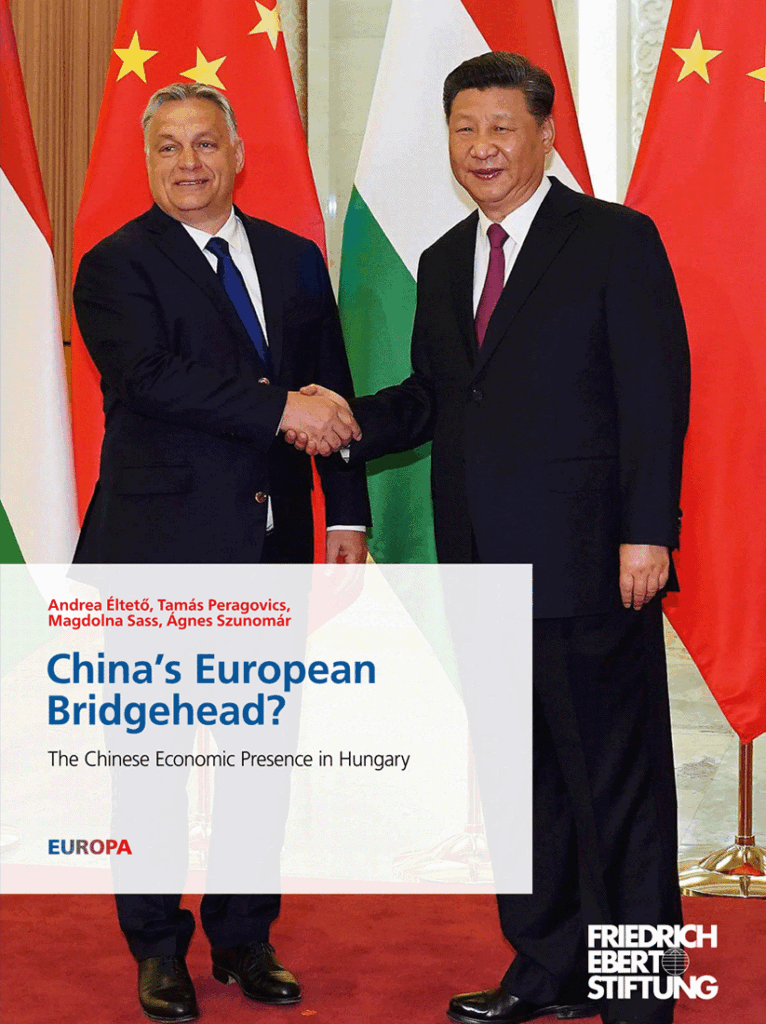
China’s European Bridgehead? The Chinese Economic Presence in Hungary Authors: Andrea Éltető, Tamás Peragovics, Magdolna Sass, Ágnes Szunomár China’s European Bridgehead? The Chinese Economic Presence in Hungary, Budapest: Friedrich-Ebert-Stiftung Budapest (2024) Abstract While the EU-China relationships are fraught with controversies, the Hungarian government has for many years been strengthening cooperation with the East Asian […]
The environmental price of battery-recycling plans of the Hungarian government
The environmental price of battery-recycling plans of the Hungarian government Article by Andrea Éltető on the Institute of World Economics’ blog It was recently reported that the Hungarian government is also trying to pave the way for battery recycling plants by amending the law, and the Minister of Economy has been persuading several battery […]

