


Ricz, J., Éltető, A.: The non-state actor contestation of battery factory investments in Hungary: the activism of GÖD-ÉRT and MIAKÖ
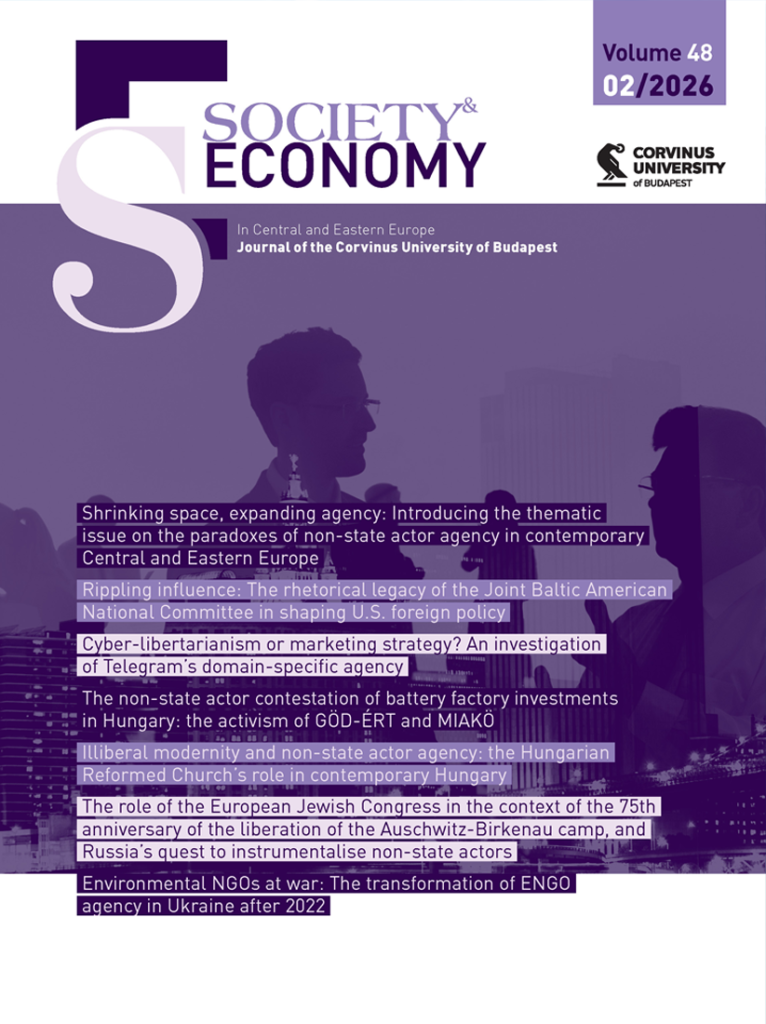
The non-state actor contestation of battery factory investments in Hungary: the activism of GÖD-ÉRT and MIAKÖ Authors: Judit Ricz, Andrea Éltető In: Society and Economy in Central and Eastern Europe, 48(2), 64-91. DOI: https://doi.org/10.14267/1588970X.2026.015 Abstract The article analyses non-state actor (NSA) agency at the intersection of autocratisation and new industrial policies. We focus on Hungary, […]
Ricz, J., Éltető, A.: Rules for sale: autocratic forbearance, as a new industrial policy tool to promote the Hungarian battery hub
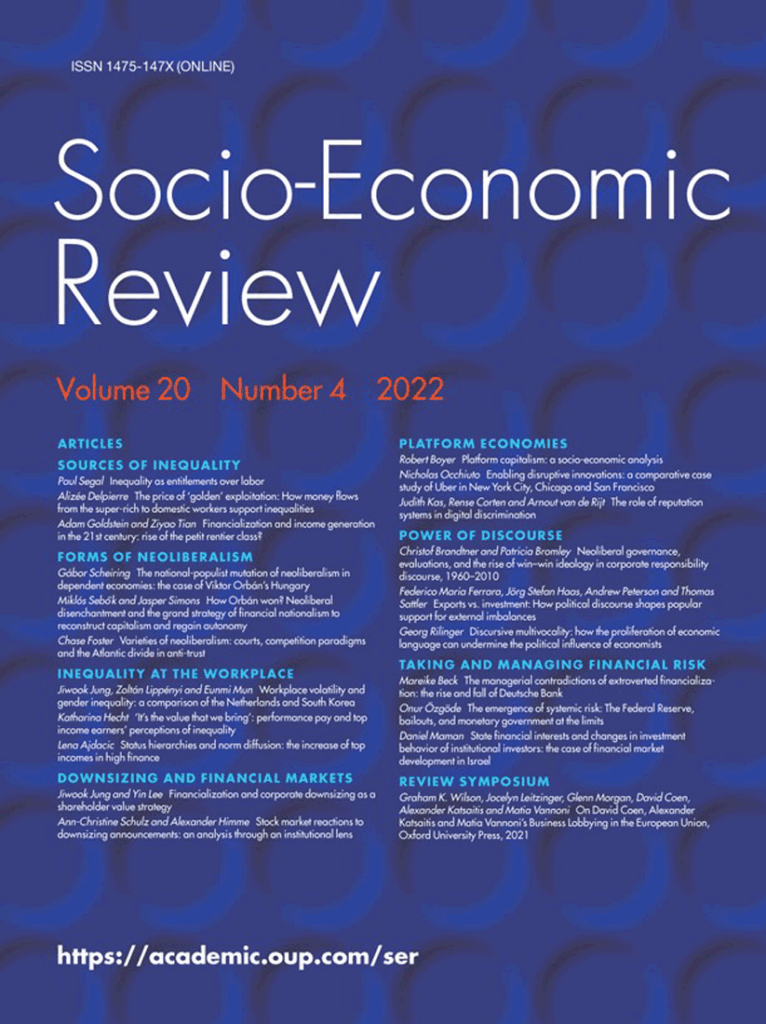
Rules for sale: autocratic forbearance, as a new industrial policy tool to promote the Hungarian battery hub Authors: Judit Ricz, Andrea Éltető In: Journal of Economic Policy Reform, 1–29. (2026). DOI: https://doi.org/10.1080/17487870.2026.2680291 Abstract New industrial policy has (re-)gained legitimacy in scholarly debates recently, as a means to boost and direct development. This article argues […]
The Path of Hungary’s EU Membership. Navigating Sovereignty, Dependence, and Economic Development
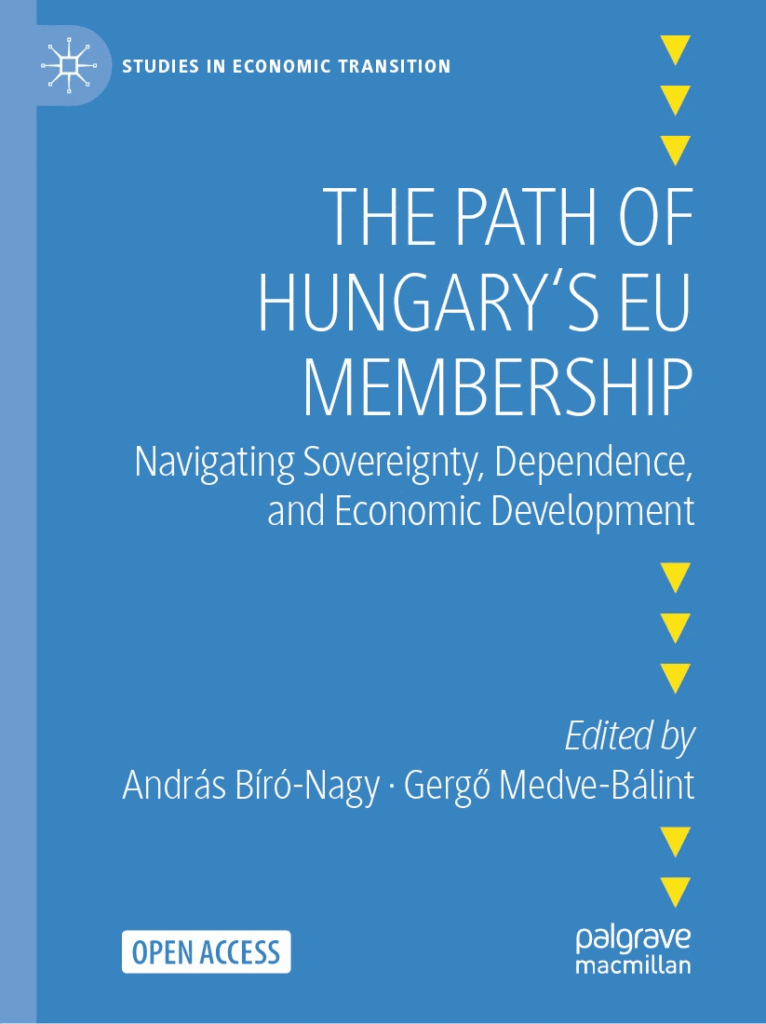
The Path of Hungary’s EU Membership Navigating Sovereignty, Dependence, and Economic Development István Benczes: ‘Defining Economic Governance Through Critical Junctures and Learning by Doing ‘ Krisztina Arató, Boglárka Koller and Anita Pelle: ‘Why Does Hungary Not Use the Euro? The Reasons and Context Behind Staying Out’ Andrea Éltető: ‘Hungarian Industrial Policy in an EU […]
Sass, M., S. Gubik, A., Túry, G.: Three years later – The integration and continuity of digital solutions at subsidiaries in Hungary after the COVID-19 pandemic
Three years later – The integration and continuity of digital solutions at subsidiaries in Hungary after the COVID-19 pandemic Authors: Magdolna Sass, Andrea Sáfrányné Gubik, Gábor Túry In: Vezetéstudomány Budapest Management Review, 56(12), 18–27. DOI: doi.org/10.14267/VEZTUD.2025.12.02 Abstract The COVID-19 pandemic precipitated widespread adoption of digital solutions, including applications, intranets, social media, online communication […]
Hungary and Türkiye: 100 years of diplomatic relations, history, diplomacy and economy – Conference
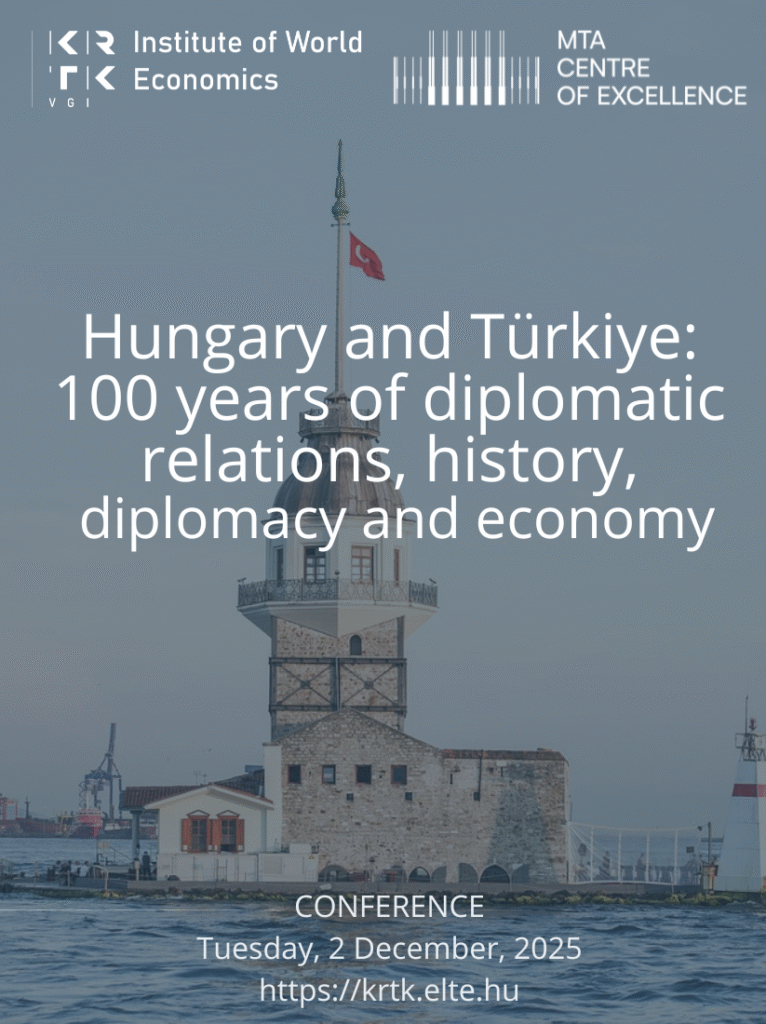
Hungary and Türkiye: 100 years of diplomatic relations, history, diplomacy and economy – Conference Date: 02 December 2025 12:30 (CET)/ 14:30 (TRT) Organiser: Institute of World Economics, ELTE Centre for Economic and Regional Studies Program 12:30 – Opening words: Magdolna Sass 12:40 – Gábor Fodor: 100 years of Hungarian-Turkish relations 13:10 – Erzsébet N. Rózsa: […]

